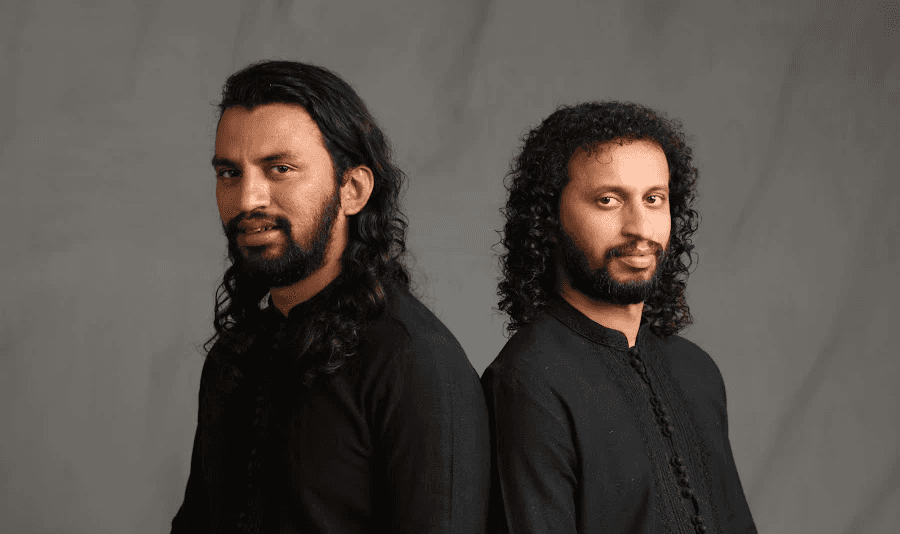
In January, Rito Riba recorded a rough scratch full of words that rhymed, “nakhrewali,” “duniyawali,” and more along those lines. It sat among his unfinished recordings until he wrote “Zikar,” sent it to his producer, Tongs Kichu, and asked him to listen to it. Kichu liked where it was heading and asked if there was more. Riba went back through his scratches, found the January one and handed it to his lyricist, who wrote “makhmali” into it. “I thought the songs ‘Makhmali’ and ‘Zikar’ were going together, even the genres were clicking,” he tells Rest In Beats.
What was meant to be a single became Dilfek, a five-song EP that came out on 16 October. It is Riba’s first Hindi EP, following Native Notes, a Galo-language EP released in 2025. When we speak on a call, “Dilruba Dilnasheen” is at No. 146 on Spotify’s India daily chart, and more than 180,000 reels exist across the EP’s tracks. It has since climbed to No. 123. Riba treats numbers like these carefully. “‘Heer Ranjha’ also came on charts, and it eventually disappears, so it’s nothing of importance,” he says. What he looks for is another singer covering his song. “If I see someone singing my song and making a cover on it, it feels like they actually like the song, so it doesn’t matter whether it’s in the chart.” It’s a habit from his own years of posting covers, only of songs he liked.
Almost every turning point in Riba’s career has arrived through a screen, from a viral Indian Idol audition to a message from Shreya Ghoshal on Instagram. For a stretch in between, trying to please that screen left him, in his words, lost. “I thought I was lost somewhere in between,” he says of the years after his first songs. Dilfek is what he made once he stopped trying.
It also lands at a moment when the old route no longer decides who gets heard. For decades, a film credit was the surest way into an Indian music career. Spotify’s 2026 Loud & Clear India report found that independent Indian pop, released outside film soundtracks, made up half of the platform’s year-end top 10 in India for 2025, and that royalties generated by Indian artists on Spotify grew 29 per cent. Riba says he was never drawn to Bollywood. “I always wanted to put out my own music, my own sound,” he says.

Photo: Courtesy of the Artist
Riba grew up in Pasighat, in Arunachal Pradesh. His father sang a little and played guitar but never took it up as a career. Riba belongs to the Galo tribe and speaks Galo, one of the many languages of a state with, as he puts it, “so many tribes and subtribes.” Before he sang, he danced, mostly to Michael Jackson.
In 2014 or 2015, in college, he started posting covers on YouTube, in videos without his face. “I was very shy to show my face in the videos,” he says. He only sang songs he liked. They stopped satisfying him eventually, and he went looking at how artists like John Mayer write their own. “No matter how many covers you do, it’s not going to be yours, even though you’re singing it,” he says. “So I decided I have to make my own original content.”
His career, in his telling, began with “Heer Ranjha” and “Meri Banogi Kya.” In 2022, his audition for the 13th season of Indian Idol went viral, though he didn’t make the final line-up. He took it gracefully, saying at the time that it had been his dream to represent his state on national television. In conversation, the show comes up only sideways, in the story of how his team formed. After he came out of “the reality show,” he started doing gigs and wanted someone to photograph him on stage, and hired Sanjay Chetry, a photographer from Guwahati. Sanjay has since directed five or six of his videos, including “Dilruba Dilnasheen.” “He’s like a small brother,” Riba says.
“Pyaar Aata Hai,” his duet with Shreya Ghoshal, began as a scratch. Producer Rajat Nagpal asked him to sing a rough version, and he agreed without knowing who would eventually sing with him. The song sat in a corner for almost two years, with everyone liking it but nothing decided. Then Nagpal sent it back with her voice on it. “I was like, what just happened?” he says. He went back to Mumbai and redid his vocals. “Rajat bhai, I want to do ten more takes,” he told Nagpal. They never met in the studio, because their schedules didn’t line up, but she later messaged him on Instagram: “Rito, what a lovely voice you have.” He has sung one Bollywood song, “Pehla Ishq,” a playback track composed by Nagpal that landed in a film starring a member of Salman Khan’s family. Riba, a self-described big Salman Khan fan, took what he could get. “If not Salman Khan, then at least Aayush Sharma [Salman Khan’s brother-in-law],” he says.
But after “Heer Ranjha” and “Meri Banogi Kya,” he says, “I was a bit lost, and kept thinking of what I should do.” It took around two years to find a way forward. At one point he tried making songs that would work on reels. “Now it’s like the industry standard that if the track works on reels, it automatically means the track is successful,” he says.

Photo: Courtesy of the Artist
Dilfek was made without that pressure. “When I made this EP, I was like, whether this works on reels or not, I like it and I’m confident about it,” he says. “So we just put the EP out. That’s all.” He was nervous all the same. “I was a bit nervous about how people would like it,” he says. “I’m trying to do something new, playing with the genre.” The response has been almost entirely organic. The advice he wishes someone had given him when he started, before reels existed, is to take social media seriously. He has since taken a break from posting, he says, and feels it left a big gap.
The EP does not stay in one lane. “Zikar,” “Makhmali” and “Zakhmi” sit in indie pop and rock, with Rajasthani folk running through the last of them, while “Dilruba Dilnasheen” and “Joganiya” go for 80s retro pop. “Actually, they’re not of the same genre, but then I figured out that the sound is similar,” Riba says. He decided it wasn’t important for a whole EP to be one genre. A sixth song, the Afro-flavoured “Ayanam,” didn’t fit, so he put it out as a single.
It was made the way he makes everything, with people he has known for years. “We work as a family,” he says. “I don’t work with just anyone. I build a connection.” Sidhant Kaushal, who has been writing with him for three or four years, wrote three songs on the EP. Kichu, the producer, produced all five songs. The only new name was Saheal, a lyricist from Chandigarh, whom Riba brought in because he needed someone who could bring in the Punjabi essence.
The last song finished was “Zakhmi,” which needed a folk vocalist. Riba searched for a long time. The famous ones, he decided, already had too many songs and were too big to approach. His Instagram feed, by then full of Rajasthani folk singers because of all his searching, surfaced Dene Khan singing at a gig. “I realised that this is the voice I was looking for,” he says. For someone wary of what the platform does to music, he is happy to credit it with finding the last voice on the EP. The comparison got to him. “At one point, I even stopped using Instagram, because then you see too much creativity,” he says.
The retro songs trace back to those dancing years. When he started listening to Michael Jackson, he wanted to know who else made music like that, and found Prince. He read articles and watched YouTube documentaries about the rivalry between them. “They both used to make retro pop and disco pop type of music,” he says. “I thought that I should make some music like that.”
He wanted the words to match. “If the music is made like that, I should sing that way too. But the lyrics should also be from that generation,” he says. He told his lyricist to remember Salman Khan’s songs from the era and use as many old words as he could. He also had a complaint about the present. “A lot of songs are being made lately, but it all feels like they’re writing on a loop. Even if it’s a romantic song, it’s all the same lyrics,” he says. It leaves the EP in an unusual position, a set of love songs in the vocabulary of old Bollywood that, he says, are not about anyone. “It’s just that we liked it, so we did it,” he says.

Photo: Courtesy of the Artist
He is blunt about the business of live music. When he started, he opened for bigger artists and rarely got more than 30 minutes of sound check. “Thirty minutes is not enough, even for a big band,” he says. Every artist should get up to an hour and a half, he thinks. “Whether it’s a small artist or a big artist, everyone should get time.” Asked about the mic being cut on Shilpa Rao at the Bollywood Music Project, he says it has happened to him too. He doesn’t blame the artist who was on stage next. “He was just doing his job,” he says. “I believe it’s the management’s fault.”
He also sees the same screens that frustrate him opening doors. “Social media has become so strong that you see so many videos from each part of India or outside India as well,” he says. “It’s a golden time for people from the Northeast and all the parts of India who are trying to make new music.”
Next comes the road. Riba says an Indian tour behind Dilfek should begin in mid-January. It will be his first. After that, a single, he says, and then a full album of 12 to 15 songs with collaborators. He has two or three of them cracked, and thinks it could arrive by the end of next year. He also wants to make an LP in Galo, and will keep posting songs in his local dialect on his YouTube channel in the meantime. “I’m just grateful, actually. That the songs are doing good,” he says.
When our call winds down, he asks which song from the EP I liked. I tell him “Joganiya.” It’s his favourite too, he says, because it’s “totally different” and not his usual type. It is also the first song where his producer added a vocoder, and the vocals sit lower than on the other four. Singers, he points out, always want to hear their own voice. “When you get the mix master, they always say, ‘I want my voice to be louder,’” he says. His producer told him he was going to cut down his voice this time. “It was sounding good, and we liked it,” Riba says. The song he likes best is the one where he is least audible.
Someone on the call jokes that he’s a very good dancer too, and that fans might see some moves. Riba says he was a dancer before he was a singer. “Since ‘Joganiya’ is out, I feel like I have to learn how to dance, and then I have to bring back that childhood,” he says. “People obviously know me as a singer, but as a dancer, not yet.”
Tags:
Rito Riba
|
Dilfek