
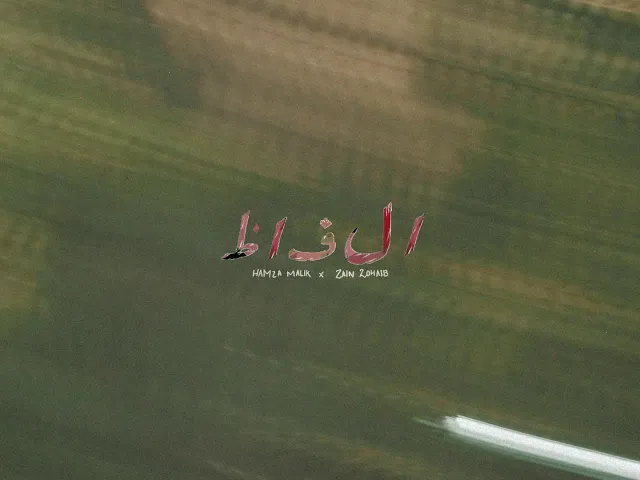
Since "Alfaaz" by Hamza Malik and Zain Zohaib climbed to No. 1 on Spotify India's daily and No. 42 on global charts, the word “qawwali” keeps getting tagged to it. It makes sense for the audience to label it a qawwali, but it isn’t quite accurate.
What makes a qawwali a qawwali
Qawwali is defined mostly by its purpose: Sufi devotional music, traditionally traced to Amir Khusrau, the poet-musician often called its father. Its initial purpose was to bring listeners closer to the divine. Poetry in qawwali is about romance, describing a beloved, talking about longing and intoxication, where the beloved is usually God or a spiritual guide.
A qawwal party is a group performance, where lead vocalists carry poetry, a chorus repeats and answers key lines, and harmonium, tabla or dholak, and handclaps drive the rhythm. Performances start slow but often run past 15 minutes, with singers returning to a single line until the gathering reaches a collective release.
The line was never fixed
Even the form’s greatest, Nusrat Fateh Ali Khan, moved freely. He performed classic devotional qawwalis such as Khusrau’s “Aaj Rang Hai” and Bulleh Shah’s “Pia Ghar Aaya.” He also sang romantic songs and crossovers with guitarist Michael Brook. In "Yeh Jo Halka Halka Suroor Hai," one of his most-loved songs, he compares a lover to God, using the spiritual language that qawwalis often have.
This overlap is the key to "Alfaaz."
Where "Alfaaz" fits
By strict definition, “Alfaaz” doesn’t qualify as a qawwali. It runs for three minutes, is romantic and most importantly, skips the long, improvised build of a qawwali but it keeps more. The track begins in the pop territory, with Hamza Malik’s Urdu verse. Then Zain Zohaib takes over in Punjabi, the language of much of the Sufi poetry qawwals sing, and the song then enters qawwali territory, carried by handclaps, harmonium and the rhythm of a mehfil. His imagery moves closer to devotion as well; gazing at the beloved, revering paths once walked, and insisting there is no one else. The chorus is about the beloved with formal reverence with no grand words to praise them. It seems like a romantic idea, but it’s also one of the oldest ideas in Sufi poetry.
Why the distinction matters
Calling every song with such influences a qawwali risks reducing the form to a look and sound. That isn’t a criticism of “Alfaaz.” Popular music has been borrowing from qawwali for decades, and borrowing is one of the reasons the tradition keeps reaching new listeners. NFAK’s own crossovers introduced millions of people to it.
The most accurate label for “Alfaaz” is qawwali-inspired pop. A modern love song shaped by a centuries-old form, which the form’s modern voice also moved in and out of.
"Alfaaz" is streaming now on all platforms.
Tags:
Alfaaz
|
Zain Zohaib


