
Sanchit Khosla and Rishabh Raghuvanshi came into the Rest In Beats office to talk about their new EP, Aarzu. There was some easy back and forth about music before the mics went on, and a few questions into the interview, Raghuvanshi's phone lit up - his mother, calling from an airport she and his father had just landed at, needing help booking a cab. He took the call, sorted it out in a few minutes, and picked the thread back up without asking to restart the question. That's basically the whole dynamic: things happen mid-sentence, and the conversation just absorbs them and keeps moving.
Within a few more minutes, the two of them had compared themselves to a married couple. "Have you seen a married couple that fights a lot?" Raghuvanshi said. "We are literally that couple." Two musical egos, permanent low-grade conflict, a process that depends on neither one winning outright.
It's a fitting way to describe two people who, a year ago, made an album together. It has a title, a tracklist, and a shape. Almost nobody has heard it, and by the time anyone does, it won't be called an album anymore.

Photo: Courtesy of the Artist
On July 7, KhoslaRaghu released "Bewajah" - the first of five songs on Aarzu, their third consecutive annual EP after Aao Bhula Dein (2024) and Aawara (2025). Four more tracks are coming: "Mile Jo Sukoon," "Naina Saawan," "Hausle" and the bonus cut "Teri Aadatein." A second EP drawn from the same sessions, is still to arrive. All nine songs were at one point, a single finished record.
"We came to Mumbai to make an album, and we actually completed the album," Khosla says. Then the two of them looked at what a full-length record asks of a listener now, and backed away from it. "We realized it was a lot to ask of our listeners, because attention spans are so short now that a lot of songs simply get missed. You also start getting biased with your own songs, telling yourself to push this one and leave that one alone. So the best decision for us and for our team was to break it into two halves, so that each EP could be promoted properly on its own terms."
Raghuvanshi puts it more bluntly: "An album is a very big commitment, and it was not one we could afford right now." He knows the staggered rollout has irritated some listeners, who've asked why they have to wait three months between releases instead of getting the whole thing at once. His answer is that the wait is the point - each song needs time to sit with an audience before the next one arrives and crowds it out.
It's a decision two people made together, which is notable mostly because almost nothing else about how KhoslaRaghu work sounds like agreement. Khosla will hand Raghuvanshi an idea, get told it's good, and then watch him come back with something else entirely - not a tweak, a different song. "Bewajah" went through that. What's changed, both of them say, isn't the friction but how they've stopped treating it as a problem. Early on, Raghuvanshi says, disagreement read as frustration. Now it reads as two people with different instincts working out what to do with both of them.
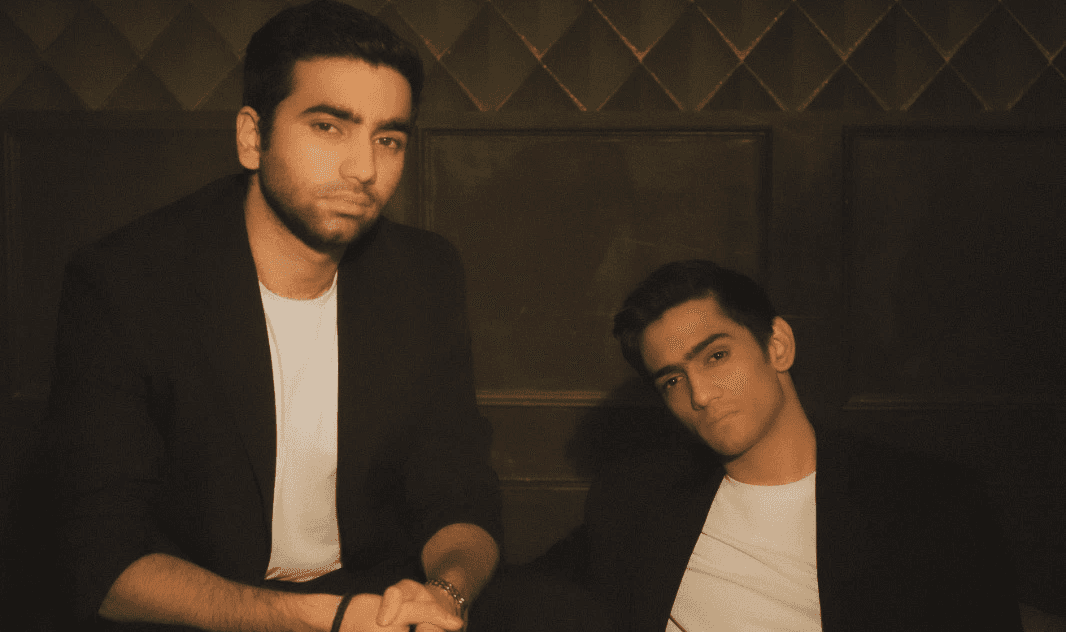
Photo: Courtesy of the Artist
You can hear it in how they answer the same question differently, almost on principle. Ask about deadlines and Khosla claims he can't function without one - a self-described procrastinator whose brain switches on the night before something is due. Raghuvanshi wants the opposite: room to make four or five versions of a song before picking one. Ask about concerts and one of them wants to be pressed against the barricade; the other says he'd love that too, but has spent years hanging further back because he gets self-conscious about how he dances. One of them has never had a cup of chai in his life. The other keeps several physical diaries piled up in his room, despite also owning a digital notebook, because writing by hand is more fun.
Even their instinct for revision splits down the middle. There was a stretch, Khosla admits, when he'd push for another take almost reflexively - "one more, one more" - long after a song had, by any reasonable measure, arrived. "It does create a slight difference, taking 100 takes versus 150. But the artist is the first listener, so he should be satisfied with his delivery. If he's not, then go on taking takes." Less a rule than a permission slip he's given himself.
That tension is structurally what "Bewajah" sounds like. Khosla calls it "indie rock fusion" and admits he isn't sure the genre exists - the guitar riff is Western, the claps and composition are classical and the lyrics lean Urdu. The texture matches the description. Real drums that don't quite sit on the grid, a guitar line left a beat out of time - something the early listeners flagged, and yet, the duo chose not to fix either. "We didn't want to go back into the computer and make it more manufactured," Khosla says.
The remaining songs trace a single arc rather than five standalone tracks - longing curdling into anger, anger giving way to something more vulnerable, and by the record's end, a version of hope.

Photo: Courtesy of the Artist
Whatever disagreements shape the songwriting, the two of them align on how the live show gets built, and it starts absurdly early. Rehearsals for the next tour are already underway. It's an approach they trace back to something both their mothers used to say - cramming the night before an exam doesn't work, the real work happens months out. During the Aawara run, they'd already played the set once or twice before the tour began, so the muscle memory would already be there by opening night.
Their highlight from that tour wasn't a number. It was a friend, a committed chain smoker, who came up to them after a two-hour Delhi show and said he hadn't stepped out for a single cigarette the entire time.
For them, that was probably a better review than anything they could have asked for.
Tags:
KhoslaRaghu
|
Aarzu
|
Indian indie music
|
EP


